


Tag: DUI

operation dry water

Navigating Boating Under the Influence Laws

Boating under the influence laws are strictly enforced, and are especially pertinent the summer months.

Summer pretty much translates to water time. Whether it’s a boat ride around the lake, hanging at the beach or water skiing, usually summer conjures up the images of beautiful views, the sounds of splashing of water, and the smell of sunscreen.

Boating and Drinking Don’t Mix

What you normally don’t think of, as part of this picture, is the sounds of handcuffs, the smell of a jail cell, or the visual of red and blue lights rolling up behind you. Sorry to ruin the picture, but I gotta warn you. Its not all fun in the sun out their on the waters.

Law enforcement has made it a new priority to enforce boating under the influence with the same fervor and crack down as they have driving under the influence. That’s right, the same tough DUI enforcement that takes place on the roads will now hit the water. Welcome to Operation Dry Water.

Operation Dry Water
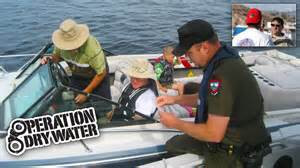
Boating under the influence lawsOperation Dry Water launched in 2009 by the National Association of State Boating Law Administrators with the U. S. Coast Guard, with the goal to bring awareness and education to recreational boaters about the dangers of alcohol and drug use while out on the water. According to the U.S. Coast Guard, alcohol is the primary contributing factor in recreational boating fatalities.

While not mandated, law enforcement agencies have chosen to participate in Operation Dry Water, lending credibility to the concern that Boating Under the Influence (BUI) is a real problem. Here in Los Angeles, the Sheriffs Department at Castaic/Pyramid Lakes and Marina del Rey; the Los Angeles Port Police; and U.S. Coast Guard are participating in the program. June 26 to 28, 2015 has been designated as the Operation Dry Water heightened enforcement weekend. But know law enforcement says outreach and awareness of BUI is year-round and added enforcement will include holiday weekends. So think of all the attention that normally accompanies DUI checkpoints on the road, that same idea has rolled out on water.

Boating Under the Influence Laws

Just so we areBoating under the influence laws all clear: it is illegal to Boat Under the Influence. The California Harbors and Navigation Code is the law on the water. It is not as stringent as the law on the land and often people get confused. The one break you get on water that you don’t get on land is that open containers are fair game. But make no mistake about it, operating a boat under the influence is just as illegal as driving a vehicle under the influence of drugs or alcohol.
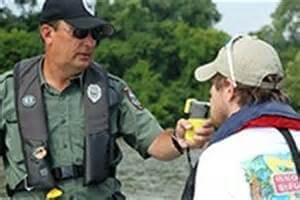
The law recognizes that boating under the influence can be just as and even many times more dangerous than driving under the influence of drugs or alcohol. People drive every day and are well practiced at it. When it comes to boating however, many people might drive a boat a couple times a year. Such a person is far from an expert boat driver. For that same person to be drunk and boating is extremely dangerous.

Roads vs. Water

Another important distinction between driving and boating is that driving takes place most commonly on roads that are fairly wide and stable. Boating often takes place out in the ocean where the tides and winds can change in an instant. If a person is under the influence, they will not be fast enough to respond properly to the changing circumstances. In fact, statistics from the United States Coast Guard show that in boating deaths involving alcohol use, over half the victims capsized their own boats and/or fell overboard.

Furthermore, boats, by their very nature, are inferior to cars in their ability to steer and to brake. Given that the typical boat operator spends only a few days a year on the water, they are typically not expert at handling the different problems that boaters encounter from time to time. When the hot sun and alcohol have had their say, an impaired person at the helm of a boat may be in bad shape and will be putting everyone aboard and nearby in danger.

Rules & Regulations

Under the Harbors and Navigation Code there are several laws that regulate boating and drinking. The boating under the influence laws are very similar to the driving and drinking laws. Harbors and Navigation Code 655b states that you may not operate a

  • boat,
  • water skis,
  • an aquaplane, or
  • any similar equipment (such as a jet ski),

while under the influence of alcohol and/or drugs.

Being under the influence is defined as having a blood alcohol content (BAC) of .08 percent for a recreational vessel and .04 percent for a commercial craft. The statute sets a zero-tolerance policy for watercraft such as aquaplanes and water skis and for boaters under the age of 21. The zero-tolerance policy means that any trace of alcohol is illegal when operating these types of watercraft.

BUI Penalties
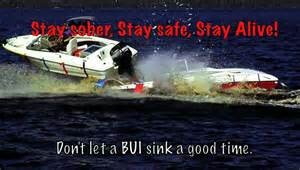
Boating under the influence lawsDUI and BUI cases are similar in prosecution. Additionally, while the penalties vary, it is only a slight variation. Under the BUI laws, you can still face fines, possible jail time and alcohol education classes. The one distinction is in the length of time priors can be used to enhance your sentence. Instead of the priorability time being ten years, as in DUI cases, priors only enhance a BUI when the DUI or BUI was committed within the last seven years prior to the offense.

Also, unlike a DUI conviction, the California DMV will not revoke or suspend your driver’s license following a BUI conviction.

Fighting a BUI

It is ‘per se’ under the influence if you are operating a watercraft in California and your blood-alcohol content is above a .08%. Keep in mind, you can still receive a BUI dependent on the officer in charge. An officer’s determination that you are “under the influence” is very important. This is true even if your actual blood alcohol content is lower than that percentage.

Let’s assume the scenario above when an officer comes on board for that safety check, the next thing you know he smells alcohol on your breath, decides to do field sobriety tests, and boom next thing you know he determines that you impaired and unable to operate the boat. You may be at risk for arrest based on California’s boating under the influence laws.

Defensible Cases

These cases can be defensible. Unlike driving patterns, boating behavior (i.e. straggling lanes, speeding, are harder to quantify and qualify, thus giving the boater more margin of error on a boat than in a car. And what about those objective signs? If someone has a red face and crazy hair, driving a vehicle, it’s easy to apply assumptions. This person is drunk! However, that same argument is easily explainable for the person who has been in the sun and wind all day. Isn’t everyone unkempt on a boat? Unsteady gait? Of course! You have been walking on water all day!

Boating under the influence lawsThere are many confusing variables involved in this type of case. Even a seasoned law enforcement officer may mistake light drinking for violation of boating under the influence laws (BUI). Your case may have some of these conditions, or any of the many others that lead to unwarranted BUI arrests. You could find yourself in a position of too much fun in the sun or wrongfully facing BUI charges. If so, you should consult with a crime attorney. A qualified DUI attorney can use the particulars of California boating under the influence laws to help you.

Summer is a great time to get outside and enjoy all that we love about Southern California. Pack your sunscreen, wear a hat, and choose a designated boater.


 

Orange County Seal

What is going on in the OC?

New Questions about Justice in the Orange County Courts May Impact You.

By Robin Sax

There is bad news for Orange County Defendants. If you had a case in Orange County, you’re at risk of errors, omissions, and/or fabrications on your record.

There is even worse news for Orange County Defendants, too. Your court records may be in jeopardy. It is possible your records received inaccurate documentation.

There is good news for Orange County Defendants. The top criminal defense lawyers in Los Angeles at The Kavinoky Law Firm have a plan. We are ready to help you correct history.

Orange County Court System

Orange County Courts-300x113The Orange County court system, as a whole, is currently under fire. For the last few weeks, newspapers and journalists alike are salivating at the opportunity to dig up even more dirt. The newest revelation reported by The Los Angeles Times is called; “Probe Underway Into Possible Tampering in Orange County Superior Court.” This report states Judge Thomas Borris ordered defendants and defense attorneys into court. His goal?

To get to the bottom of what appears to be blatant lies and factual errors in court records.

Grievous Errors on Court Records

Honestly, there is a wide variety of errors and/or blatant lies.

Some records show that the attorney of record listed in the court file is not really the attorney of record. Still others note that a jail sentence is complete when, in fact, there was no penalty jail time at all. Additionally, gross misstatements about what true occurrences in a criminal case.

What does this mean? It means that your past may be recorded incorrectly. Which in turn, could wreak havoc on your future.

This isn’t the first time that Orange County’s legal blemishes have made headlines. Just a couple of weeks ago, an Orange County Court saw a judge take a stand when ordering disqualification of the entire Orange County District Attorney’s Office in a high profile capital murder case (read: 250 prosecutors NOT allowed to prosecute their own case). In a breath of fresh air decision, the court found that there was the shady and unconstitutional practice by the Sheriff’s Department (through coordination with the DA’s office) using jailhouse informants to elicit confessions from other defendants.

Who is to Blame?

It is unclear who is responsible for these inaccurate (or false) entries. Even so, perhaps a more important query is the question of “why?”

While the Judge Borris is trying to gleam these answers, defense attorneys must ask “how does this affect our clients?” Of course, those that have court case histories wonder “How does this impact me?” The answer is huge. It could affect everything about your record going forward.

The Orange County court system relies on prior convictions. In addition, it relies on court records each and every day to paint a picture. Court records make rap sheets, provide critical records to the DMV, the Department of Corrections, and inform prosecutors of how to charge a new case. For example, in a Driving Under the Influence Case, whether someone has suffered a prior DUI will effect their driver’s license, jail sentence, and DA’s perspective of a case.

Priors effect not only the perception of a defendant in general but also provide for mandatory increases in other offenses. For example, petty theft, domestic violence, stalking, violations of restraining orders have specific requirements for subsequent effects. If someone’s record reflects completed jail time (when it isn’t), they could be looking at more time! Consequently, we typically see the DA wanting to increase the punishment to teach a lesson to the offender.

As a result, in order to address the issues of accuracy, The Kavinoky Law Firm created a system. This new system ensures our client’s records are accurate and corrects them if need be. If you would like the peace of mind to know that your case is correct and your record reflects what really occurred, call us. 1.800.NO.CUFFS.


DUI Arrest

What You Need to Know about DUI Crackdowns

DUI checkpoints may impact your drive home. Be sure you don’t drink and drive!

Summer and DUI Enforcement

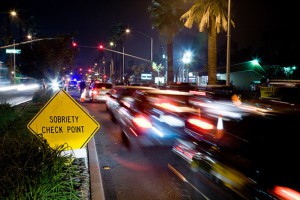
DUI-Checkpoint3-300x200We are approaching summer and with the change in seasons to warmer weather, local law enforcement steps up DUI enforcement. This is especially true with checkpoints across Southern California.
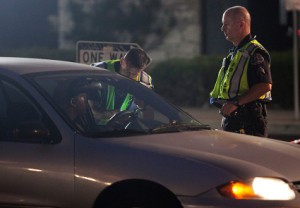
Overall, the various local and state law enforcement agencies make more than 100,000 DUI arrests each year. These occur in the five Southern California counties of Los Angeles, Orange County, San Diego, Riverside, and San Bernardino.

In 2014, law enforcement arrested 499 drivers for DUI in Los Angeles County over the Memorial Day weekend. The good news is that’s 30 fewer arrests than 2013.

One hundred Los Angeles County law enforcement agencies joined together last year. They took part in a DUI enforcement program during the three big summer holidays. The three are Memorial Day, Independence Day, and Labor Day. The program is the “Avoid the 100” campaign. The program includes sobriety checkpoints and increased roving DUI patrols to deter and catch drunk drivers.

Police love sobriety checkpoints.

Surprisingly, good defense lawyers love them too (more on that below). From the law enforcement side, checkpoints are  an effective way to prevent accidents and make arrests. However, years of experience demonstrate that checkpoints are also thorny problems for police and prosecutors. Oftentimes these checkpoints create an environment for illegal searches and arrests.

The courts ruled that sobriety checkpoints don’t violate a motorist’s Fourth Amendment rights if they are conducted within certain criteria. Really though, it’s surprising how often these criteria fall to the wayside.

 What should you do if you end up at a sobriety checkpoint?

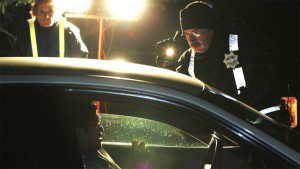
Checkpoint-300x208The first thing you should do in this situation is open your window slightly and wait for the law enforcement agent to ask you any questions. As with any routine stop, you are required to provide identifying information such as your name, address, driver’s license and registration. As a general rule, it’s good to have these things organized in advance.
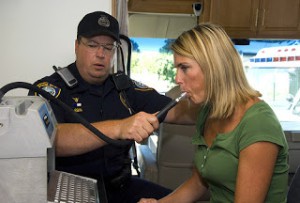
Should you be asked any further questions, you can politely decline to answer. You can say something like, “Officer, I don’t really approve of roadblocks and I do not care to discuss anything further.” If the officer persists in asking questions, you can ask for the return of your license and ask if you are free to leave.
It is imperative not to answer any questions beyond “name, rank and serial number” even if they appear harmless. Questions such about where you started driving, where you are headed, your eating and drinking patterns, when you last slept and how long, and a slew of other questions are all designed to gather incriminating evidence or eliminate possible defenses your lawyer could offer.

A recent U.S. Supreme Court case, Rodriguez vs. U.S., established that a prolonged detention – one that is extended past the reason for the initial stop – is illegal, and the evidence that is gathered afterwards can be suppressed. This can be vitally important at a sobriety checkpoint; unnecessary conversation between you and law enforcement can only serve to extend the encounter unnecessarily and possibly harm your legal interests. Remember, your right to remain silent ONLY helps you if you choose to exercise it! I can’t tell you the number of people I’ve met who, in trying to talk their way out of trouble, only talked themselves into more trouble.

 What are officers are looking for at DUI checkpoints?

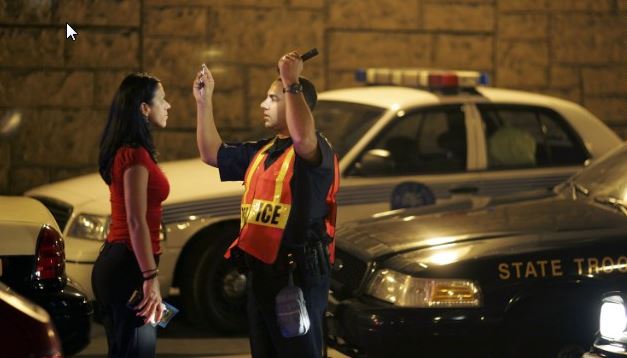
Officers are looking for impaired drivers. To do this they will use several different methods including, asking the driver questions, and observing the driver’s behavior. These signs include:
• Contradictory answers to questions
• Smell of alcohol or illegal substances
• Slurred speech
• Open bottles of alcohol in the vehicle
• Bloodshot or red-rimmed eyes
• Admission of drug or alcohol use.

DUI-Blow_BlogPost-300x203Many agencies use a portable breath test to determine the drivers’ blood alcohol content (BAC) levels. This is called a Preliminary Alcohol Screening Test (PAS). Even though it is a chemical test, it is legally considered to be a Field Sobriety Test. If you are over 21 and are not on probation for a previous DUI, this test is optional. In fact, before the officer administers a PAS test, they must read an admonition to you stating that the test is not mandatory. Because the technology shortcomings of the PAS machine make is susceptible to giving readings that are inaccurate and overly state true alcohol levels, if you’ve had any alcohol at all, especially recent consumption of alcohol, it is best NOT to take this test.
What Does an Experienced DUI Attorney Look for in DUI Checkpoints?

drunken722-300x169When conducting sobriety checkpoints, police must follow strict guidelines outlined by the U.S. Supreme Court in the landmark case Ingersoll vs. Palmer. If police do not follow the criteria from Ingersoll, the DUI roadblock isn’t lawful. Additionally, any evidence gathered during a drunk driving arrest is possibly not admissible in court.


At The Kavinoky Law Firm, our top attorneys analyze all aspects of a checkpoint. They work tirelessly to determine whether there were discrepancies between the protocol set by the courts and the operation of the checkpoint. If police do not follow all of the necessary guidelines, and there was no probable cause for a stop, we will move to have all of the evidence that from the arrest set aside.

We have very positive results doing this for our clients; it’s shocking how many sobriety checkpoints do not comply with the legal safeguards.

One of the main reasons why a good defense lawyer is optimistic about a checkpoint case is that there is a strong case for defense. These cases do not provide one of the key aspects of the case that they usually point to in trying to secure a conviction. This is, a bad driving pattern. There is no driving pattern for someone who pulls into a checkpoint. Consequently, that is something that your lawyer can use to help you win your case.

The summer holidays are a great time to get outside and enjoy all that we love about Southern California. Let’s make sure we do it in a safe and sober way.

The Kavinoky Law Firm

About Darren Kavinoky and The Kavinoky Law Firm.

Darren Kavinoky receives recognition over and over for his commitment to clients and for being a top California defense lawyer. The Los Angeles Magazine repeatedly regards him as a Super Lawyer , and the American Trial Lawyers Association highlighted him as one of the Top 100 Trial Lawyers in California. Additionally, he is the legal analyst and special correspondent for the syndicated television program The Insider, and is a sought-after guest on shows that include Entertainment Tonight, Dr. Phil, NBC’s Today Show, and various programs on CNN and the Headline News Channel. Follow Darren on Twitter @DarrenKavinoky or www.DarrenKavinoky.com.

The Kavinoky Law Firm is a criminal defense firm with offices throughout California. The firm’s mission is to deliver peace of mind to every client. Our top criminal defense lawyers work to find the best possible resolution to your legal problem. Regardless of whether you have a charge of DUI, drugs, theft, domestic violence, assault, murder, or any other offense. For more on The Kavinoky Law Firm, visit www.NoCuffs.com or call 1.800.NoCuffs.

Alcohol Education Programs

Alcohol education classes are popular in the state of California. Many people subject to a DUI or other alcohol-related offense will attend a class at one point or another.

Alcohol Education Classes

Drunk driving convictions carry several consequences. These penalties include:

  • fines,
  • jail time,
  • driver’s license suspensions, and/or
  • mandatory alcohol education classes.

The duration of the classes depends on the offense and the number of DUI / DWI convictions a driver has over a 10-year period.

Court or DMV Mandate

Alcohol education classes derive from either the court or the DMV. Usually, the mandate accompanies a handful of other penalties. Often, a driver with suspended license must work to obtain a restricted license. In order to obtain this license, he or she must either enroll in or complete alcohol education courses.

There are times when mandatory alcohol education is not-so-mandatory. It is possible to receive a reduction in requirements through a plea bargain. To clarify, a plea bargain is an arrangement with a prosecutor that allows a DUI driver to plead guilty to a lesser charge. Generally speaking, the reduced charge carries a more manageable educational requirement.

An experienced California drunk driving attorney evaluates each case to determine whether a plea bargain is a likely or favorable outcome.

Single or Multiple Convictions

Like other aspects of a DUI / DWI case, the length of an alcohol education requirement depends on the number of convictions. The prosecutor evaluates the convictions within a 10-year time period. Multiple convictions within the 10-year period have harsher penalties. Compared with a second arrest, a first arrest is much easier. For example, if a second arrest occurs more than 10 years after a first offense, it now technically a “first-time” DUI.

The standard first-offender alcohol education program requires attendance at one three-hour session for 12 weeks, or approximately 36 hours of coursework. It may be possible to get a restricted driver’s license to allow for driving to and from the program.

In light of this, the standard program for second-offenders is divided into several phases, and typically begins with mandatory attendance at weekly sessions, gradually changing to every other week. Finally, there is a 30-month program for multiple offenders.

Mandatory attendance at alcohol education programs can sometimes be reduced through careful negotiation. A California lawyer experienced in defending DUI / DWI cases can evaluate each case to determine how to minimize the amount of alcohol education and other consequences of a drunk driving arrest.

The Kavinoky Law Firm

Nobody ever expects to find themselves on the wrong side of the law. 1.800.No.Cuffs is the number you should know, but hope to never use. As a matter of fact, The Kavinoky Law firm employs the finest attorneys the state provides. That means that with us, you are in the hand of the best criminal defense lawyer in Los Angeles.

If you are under arrest for DUI, then you need a DUI attorney. Call us right away. Cal anytime, 24/7. We don’t sleep so you can.

Application for Rehabilitation Aids Entry into Canada

Entry Into Canada (Application For Rehabilitation)

Many Americans are unaware that there are several restrictions governing travel to Canada. For example, individuals with criminal convictions in the U.S. or another country likely cannot enter. In light of the tragic event on Sept. 11, 2001, the Canadian government made a decision to restrict certain travelers. Individuals with criminal records find it difficult to enter their country.

Travel Restrictions

Even a misdemeanor record can prevent an individual from traveling from the U.S. to Canada. For example, drunk driving is a misdemeanor to our neighboring north. In turn, someone with a misdemeanor DUI / DWI conviction in the U.S. is denied admission into Canada.

Since a criminal record in the United States can prevent entry into Canada, it’s critical to obtain post-conviction relief as soon as possible. Clearing the individual’s record will open up travel opportunities and release life-restrictions.

If approved, an Application for Rehabilitation will clear the way for an individual convicted of a criminal offense in the U.S. to enter Canada. The experienced lawyers of The Kavinoky Law Firm can assist an individual with an Application for Rehabilitation that may allow entry into Canada.

Application For Rehabilitation

In order to qualify for and Application for Rehabilitation to enter Canada, at least five years must have passed since the completion of any sentence and probation imposed for the offense. Some individuals can have their rehabilitation request processed at a Canadian port of entry through two processes known as “deemed” and “streamlined” rehabilitation. Equally as important, applicants must provide all required documentation and pay a fee of $200 Canadian for streamlined rehabilitation. There is no fee for deemed rehabilitation.

Required documents include identification, court documents for each conviction that show that the sentence was completed, a recent FBI criminal record check, and a police certificate from the state(s) where the offense occurred and any state where the individual has lived for more than six months in the past 10 years.

Rehabilitation requests can also be submitted to the Canadian Consulate. The individual must submit an application and all relevant documents to the Canadian Consulate. Just as in streamlined or deemed rehabilitation, there is no guarantee that the Canadian government will approve the request.

All in all, if it is less than five years since sentence completion, the individual may qualify for a Temporary Resident Permit (TRP). To qualify for a TRP, the individual must complete an application and provide all of the documentation for rehabilitation.

Work with an Attorney

The procedures for submitting an Application for Rehabilitation to enter Canada are complex. It’s best to work with a skilled attorney who is familiar with the requirements.

The best criminal defense lawyers in Los Angeles work for The Kavinoky Law Firm. They are well-versed in every aspect of the Canadian rehabilitation process. Additionally, a federal criminal defense lawyer, such as the ones we employ, can ensure the best chance of a successful application. Contact them today for a free consultation. 1.800.NoCuffs.

Misdemeanor DUI

Misdemeanor DUI charges are among the most popular driving arrests in the country. In fact, the majority of driving under the influence arrests are misdemeanors. Although a misdemeanor is less serious than a felony offense, it is still a crime in the state of California. So with that crime also comes its own set of penalties. With that said, hire an experienced criminal defense attorney the first chance you get.

Misdemeanor DUI Penalties

Under California state law, even first time misdemeanor offenses carry a fine of:

  1. Up to $1,500,
  2. A six-month license suspension,
  3. Community service requirements, and
  4. Time behind bars.

Though these penalties may seem harsh, they’re quite lenient compared to the penalties for felony DUI.

Drunk-Driving Laws in California

California has two basic drunk driving laws:

  1. It is a misdemeanor to drive under the influence of alcohol and drugs, and
  2. It is a misdemeanor to drive with a BAC of .08% or more.

In most cases, a defendant sees both charges in court. Although the defendant may be charged with both offenses, they can only receive punishment for one. Also, the penalties are the same for both offenses.

Misdemeanor Charges

If this is your first driving under the influence offense, chances are you’ll get a misdemeanor DUI charge.

A DUI arrest triggers two cases. First, the case with the criminal court. Second, a case with the DMV. With misdemeanor cases, there is no need for a grand jury to convene and investigate the DUI charges. Additionally, the offender may keep some of his or her rights. Unlike those convicted of felonies, this defendant keeps the right to serve on a jury, vote, or practice certain professions.

To determine whether your offense is a misdemeanor or felony, the court will review several factors. These include the circumstances of your arrest and any previous criminal activity. Most DUI cases fall under the realm of a misdemeanor unless a few conditions are true. You’re more than likely to face felony charges if you were:

  • Involved in an accident,
  • Driving more than twenty miles an hour over the speed limit, or
  • Driving a passenger under the age of fourteen in your vehicle.

Penalty Information

The penalties for a misdemeanor DUI in the state of California usually include informal probation for up to five years, up to six months in county jail, up to $1,000 in fines, mandatory alcohol and/or drug programs, and a license suspension that can last for up to ten months. Depending on how many previous misdemeanor DUIs are on your record, a mandatory jail sentence may be included in the penalty.

There are a variety of ways to fight a misdemeanor DUI charge in the state of California. Chemical tests come with their own set of inaccuracies, and certain medications may have an effect on your blood alcohol content. Additionally, sobriety checkpoints must adhere to strict legal requirements. If an officer forgets to read you your Miranda Rights, you may win your case.

If you’ve been arrested for a misdemeanor DUI, an experienced criminal defense attorney can help you win your case and protect you and your family from the criminal and financial penalties associated with a misdemeanor DUI.

Third Offense DUI

3rd DUIThird offense DUI charges are more severe than first or second offenses. If you have more than one DUI charge within ten years, you may think you know what to expect.

However, third offense DUI does not carry the same fines, penalties, jail terms and other requirements as the last time.

Under state law, anyone who is a habitual drunk driver, faces harsher punishments each arrest. Just a note: A habitual drunk driver is anyone convicted of more than one DUI within ten years. So, the consequences of a third offense DUI are much worse than other offenses.

Consequences of a Third Offense DUI

The consequences of a third offense DUI depends on a few factors. It depends heavily on whether or not the driver submitted to a chemical test. If a driver arrested for a third DUI in ten years submits to a chemical test, he then faces a less-harsh penalty. He is looking at a two-year license suspension and SR-22 insurance for three years following license suspension. They also have the option of requesting a restricted license after eighteen months.

Those who refuse to submit to a chemical test face much stricter penalties. These include:

  1. Additional license suspension of up to one year for a first refusal,
  2. Two for a second refusal, and
  3. Three for a third refusal.

Additionally, drivers who don’t submit a chemical test cannot obtain a restricted license.

Additional Penalties

According to California Law, a DUI arrest triggers an automatic license suspension. You only have ten days to challenge your suspension with the Department of Motor Vehicles. So, it’s crucial to find a qualified criminal defense attorney quickly.

Once the DMV receives your request, you’ll have a hearing where a DMV official will review the evidence against you. Here, the judge will decide if your arrest was legal. If the arrest was legal, in their opinion, your license will remain suspended.

The punishment handed down from the DMV is separate from the penalties stemming from a criminal conviction in court.

The Criminal Penalties of a Third Offense DUI

These include:

  1. Three-to-five years informal probation,
  2. A fine between $1,800 and $2,800,
  3. A minimum of a two-year loss of your driver’s license,
  4. Mandatory 18-month DUI classes, and
  5. A required 120 days of jail.

Though it is possible to have your jail term converted to an alternative, like home arrest, rehab, or a combination of the two, many counties insist on at least 210 days of jail. Yet others require a full-year prison sentence.

Though these are the typical penalties for a third offense DUI, the specific punishments rely on the specifics of the case and your previous DUI history. If the courts deem your blood alcohol level to be excessively high, or if you caused an accident or had a minor in the car with you at the time of arrest, enhancements can be added to your punishment- including additional time added to your license suspension, increased jail time, or the required installation of an Ignition Interlock Device, a breathalyzer-type device attached to your vehicle which must be blown into before the engine can be started.

If you’re found guilty of a third offense DUI, you’ll also be designated as a habitual traffic offender by the DMV. This designation can increase fines and penalties for future traffic violations.

Hire an Expert Attorney

The Kavinoky Law Firm employs the best DUI lawyers in Los Angeles. Call for a free consultation anytime with a top criminal defense attorney in California. Call 24/7 – 365 days a year. We’re here to fight for you.

Second Offense DUI

Second Offense DUI charges are different from first offenses and misdemeanors. If you’re one of the thousands of individuals with a prior drunk driving conviction on your record, being arrested for a DUI once again can be a distressing experience.

Second Offense DUI

The penalties of a second offense DUI are much more serious than those that accompany a first offense DUI. These penalties comparatively include:

  1. Heightened jail time,
  2. A longer driver’s license suspension,
  3. Higher fines, and
  4. Additional punishments.

California state law classifies delineates between repeat and first-time offenders. For example, anyone convicted of DUI more than once in a ten-year period is a repeat DUI offender. Consequently, lawmakers and police officers show little empathy towards these individuals.

Repeat OffendersSecond DUI

Repeat offenses fall under California Vehicle Code 23540.  According to this code, any person convicted of two DUIs within a ten-year period shall be punished by:

  1. “…imprisonment in the county jail for not less than 90 days nor more than one year, and
  2. by a fine of not less than $390 and no more than $1,000…”

Though this is the technical punishment for a second offense DUI, two-time offenders can also expect:

  1. Three-to-five years of probation,
  2. Mandatory 18-month or 30-month court-approved DUI classes, and
  3. A two-year driver’s license suspension in addition to the jail time and fines.

Restricted License

If certain requirements are met, the defendant may request a restricted license. The restricted license may be come after one year of license suspension is complete. Additionally, it comes only if the defendant can:

  • Provide proof of enrollment or completion of a treatment program,
  • Financial responsibility, and
  • The payment of specific fees.

If you receive permission for a restricted license after one year, it comes with a caveat. The judge requires you to install an Ignition Interlock Device (IID) in your car. This breath device is the gate-keeper to starting the car. It attaches to the steering column. To start the car, the defendant blows into the device to show they have a 0% BAC. Once the BAC reads 0%, the car starts. The IID measures blood alcohol content and prevents the car from starting if alcohol shows.

Jail Time & Additional Penalties

Jail time is mandatory for a second offense DUI. There is a required minimum of 96 hours, though many counties will insist on at least ten days. Still, many other counties may require 30.

One factor the DMV considers is whether the motorist takes to take a chemical test. Those arrested who agree to a chemical test upon arrest face the standard penalties. However, those who refuse a chemical test face more severe consequences. Included in the severity is the judges right to refuse a restricted license.

Enhanced penalties may accompany a second offense DUI. This is true if the defendant is:

  • Still on probation for the prior DUI,
  • Driving on a suspended license,
  • Refuses the chemical test,
  • Guilty of speeing more than 30 miles over the posted speed limit, and/or
  • Blowing driver’s alcohol levels exceeding .15%.

Since much of a sentence depends on what a judge sees fit, a qualified criminal defense attorney can help convince the judge that you are worthy of another chance. Upon your arrest for a second offense DUI, remember to contact the DMV within ten days. Hire an experienced DUI lawyer to help you build a defense.


If you should find yourself arrested for DUI, talk to a criminal defense lawyer at The Kavinoky Law Firm right away. 1.800.NO.CUFFS is the number to call – we don’t sleep – so you can. Don’t wait to get a free consultation from one of the best criminal defense attorneys in the state of California.

Find a DUI Lawyer Near Me

Holidays are the Most Dangerous Time of the Year

The Holidays are not normally the natural thought for the “most dangerous time of the year.”

The holiday season supposedly brings tidings of joy and good cheer. But, according to crime trends and annual police reports, the holidays also bring an increase in domestic violence, alcohol crimes, and gun offenses. If you’ve been accused of a crime during the holiday season, you don’t have to rely on Santa to bring you a good criminal defense lawyer- the lawyers at the Kavinoky Law Firm have you covered.

While it’s unknown exactly why crime increases during the holiday season, it’s safe to assume the stress of the holidays help expedite the transformation of rage into violence and that the festivities of the season encourage alcohol consumption, often irresponsibly.

Domestic Violence

Though domestic violence tends to increase during the holidays, the National Domestic Violence Hotline states that calls to the hotline actually drop dramatically on major holidays. The reason? Many women will choose to deal with the violence temporarily so their children don’t have to spend the holidays in a shelter. While drugs and alcohol may play into the upsurge of domestic violence during the holidays, simply being “forced” to spend more time together seems to be strongest spark.

Guns

Though ‘celebratory gunfire’ is a custom for some during the holidays, this act is dangerous. It is also illegal, and considered a prosecutable firearms offense charge . The City and County of Los Angeles do not tolerate the practice and are now using “Shotspotter” to find the culprits. Shotspotter delivers the world’s “most powerful, most scalable and most trust gunshot detection solutions…all over the world.” According to the police, those caught face prosecution to the fullest extent of the law.

DUI’s During the Holidays

The amount of DUI-related deaths and accidents increase between Thanksgiving and the end of New Year’s weekend. In fact, this part of the holidays is referred to as “DUI Season.”

In an effort to combat drunk-driving-related deaths and injuries during the holidays, law enforcement amps it up. Agencies nationwide increase their patrols and execute DUI checkpoints. Companies like AAA encourage drivers to utilize Tipsy Tow. This is a great service which offers free rides and a vehicle tow up to seven miles to drivers. If you are intoxicated or under the influence on New Year’s Eve and the Fourth of July, call Tipsy Tow. You can ask for a ride and a tow by calling 1-800-400-4222.

If you are facing a driving under the influence charge, you need a lawyer. Perhaps you acted a bit trigger happy on New Year’s Eve and have a weapons charge, you need a lawyer.  Also, if you’re looking an a domestic violence charge, you need a lawyer. For all of these things, a criminal defense lawyer is the very best person for your case. Your attorney will help you every step of the way.

Find a DUI Lawyer Near Me


Types of DUI Offenses

DUI Offenses vary in their actions, convictions, and penalties. Depending on the exact offense you’re facing, previous DUI offenses, and location, the penalties differ.

DUI Offenses in California

dui offenses

In California, a DUI conviction carries stiff penalties, fines, and punishments.

In most cases, criminal charges consist of two offenses:

  1. Driving under the influence, and/or
  2. Driving with .08% blood alcohol concentration or higher.

However, while it’s possible to be convicted of both offenses, there is only one sentence for both convictions.

Current DUI Law

Under current California DUI law, each offense determines a different penalty.

A first offense DUI carries any and all of the following penalties

  • Serve a jail term of a minimum of two days and a maximum of six months
  • Installation of an ignition interlock device (IID) if the conviction is in Alameda, San Francisco, Los Angeles, or Tulare County
  • License suspension
  • Payment of various fines and fees
  • Placement on informal probation for three years.

According to the Los Angeles Times, the past few years reflect an increase in fines and penalties. For a first-time DUI in the state of California, penalties and fines are up 29% from those in 2011.

Prior Convictions

With all this in mind, it is important to note these are not the only factors. In fact, prior drunk driving convictions have a dramatic impact on new punishment for DUI offenses.

Those convicted within ten years of a second or third DUI may face:

  • Mandatory drug and alcohol programs that can last up to 30-months, and/or
  • License suspension for one or more years.

If enhancements occur during the case, California DUI law requires increased penalties. Enhancements are additional factors that negatively contribute to the DUI offense. These include:

  1. Driving under the influence with a child under 14 in the car,
  2. Excessive speeding at the time of arrest,
  3. Chemical test refusal, and/or
  4. Prior convictions within ten years of the current date of arrest.

In regard to priors, one or two prior convictions carries an increased jail sentence and longer license suspensions. Furthermore, three or more priors automatically change the offense to a felony. Additionally, if another person experiences injury or dies, the penalty increases. If these occur as a result of your DUI violation, the offense can be charged as a felony DUI.

DUI Punishments

The punishments for DUI offenses vary depending on the facts of the case. However, a DUI charge always generates two different cases in the state of California. One case is with the DMV. The power to suspend or revoke a driver’s license in DUI cases comes from the DMV. Then, the second case is with the criminal court. Criminal court cases either go through dismissal, plea bargain, or with an actual trial.

Whether you’ve been charged with a misdemeanor or felony DUI, the penalties for drunk-driving are serious. In fact, they affect an individual’s financial and personal life for years to come.

So, if you’ve been arrested for driving under the influence, finding the right California DUI lawyer who specializes in criminal defense can help you zealously fight your case in court. The Kavinoky Law Firm employs the best DUI lawyers in Los Angeles.

Regardless, we know nobody looks good in handcuffs. #unlessyoureintothatsortofthing